Posts

Image
Sorry I haven't posted anything in  while- life got busy! ;-) Happy Earth Day! This is going to be a special issue just for earth day in honor of our planet! Here are a few things that you can do today and everyday that help our planet: 1. Use less waste!      Click here  to read about The Great Pacific Garbage Patch and learn how our waste affects our planet. 2. Use less energy! The energy that we use wastes our resources, and we only have so much! Eventually, our resources will run out if we use them unnecessarily. Do your part by turning of the lights and any electronics when you are not using them! Click  here  to read more about World Energy Consumption and how we can help to save our planet! 3. Leave wildlife alone! Wild animals need to stay in their natural home in order to live a happy, healthy life. Some wild animals sure are cute, but leave them alone for their sake! If an animal is severely ...
Image
Happy Holidays! Happy Holidays everyone! Now is the time to celebrate everything that we are thankful for. I am thankful for my family, friends, and this wonderful planet that we inhabit.  As the new year approaches, many people are probably thinking about their new year's resolutions. This year, make sure that you are doing your part to make our world a better place! Our world is a beautiful place, preserve that beauty. Go save the planet!
The Hole in Our Ozone Remember that ozone hole that forms above Antarctica every year? Well, according to NASA, this hole is slowly shrinking every, this year's smaller size due to the usual variations of Antarctic weather conditions. In 2006, the ozone hole had reached a record size, more than 11 million square miles. Ozone is a gas made up of three oxygen atoms (O 3 ). It occurs naturally in small (trace) amounts in the upper atmosphere (the stratosphere). Ozone protects life on Earth from the Sun’s ultraviolet (UV) radiation. In the lower atmosphere (the troposphere) near the Earth’s surface, ozone is created by chemical reactions between air pollutants from vehicle exhaust, gasoline vapors, and other emissions. At ground level, high concentrations of ozone are toxic to people and plants. Scientists don't expect it to be completely healed until 2065, but if we do our part, we could probably speed up the process. "With ozone depletion, mankind has demonstr...
Image
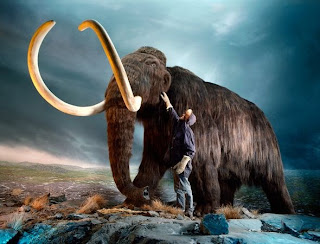
Cloning for the Better- or Worse? 10,000 year old blood extracted from an extinct woolly mammoth found in Russia could possibly be used to resurrect this ancient, extinct species.  Just because we can, though, doesn't mean we should. My personal philosophy is that these mammoths became extinct for a reason, so why should we bring them back for our personal enjoyment when they will just go extinct again?  Our climate is so different than the climate during the ice age, practically polar opposites.  Also, the present elephant population is being poached for their ivory tusks and woolly mammoths are multiple times their size, so wouldn't they get poached, too?  Basically, I see it as if we do bring them back they are going to become extinct because of their environment or they are going to get poached and die off.  My best friend has a blog all about elephant poaching and elephants, so I know what's happening to them and what might happen to these mammoths...
Image
Pictures of the Day! My personal favorite- the hedgehog!  I know that I have never posted somethings like this, but I thought that you might like to just look at some pictures relevant to other posts and topics. Here are some endangered species that are endangered because of our careless actions. When we pollute, adorable endangered animals like these die. :( Some ways that you can protect these endangered animals are: 1. Use less energy which contributes to global warming 2. Drive Less to conserve our environment 3. Create a compost pile to reduce food waste 4. Recycle and Reuse- don't use landfills 5. Eat organic and don't spray herbicides and pesticides because of water pollution.
Image
The Marine Mammal Center If you live in the San Francisco Bay Area, check out the Marine Mammal Center in Sausalito, CA. Workers   Volunteering http://www.marinemammalcenter.org/Get-Involved/volunteer/#.UTzKF9FDpAs The Marine Mammal Center offers many volunteer opportunities including a youth volunteer program for ages 15 to 17. Volunteers help rescue and rehabilitate sick and injured marine mammals, educate the public about the conservation of marine mammals and their environment, and more. You can visit the Marine Mammal Center Website for more information:                                                     http://www.marinemammalcenter.org Go save the planet!
Image
Eco Hero: Jane Goodall Beginning in 1957, Jane Goodall started her work at Gombe National Park in Tanzania, Africa. Her mission was to better understand how chimpanzees live and to help build awareness about chimpanzees. Jane wanted people to help protect the chimpanzees and their environment. While there, Jane befriended and lived like chimpanzees and grew to love them. Realizing how important these animals were, she decided to start Roots and Shoots: the Jane Goodall Institute. "Jane Goodall’s Roots & Shoots provides young people with the knowledge, tools and hopeful inspiration to improve the environment and the quality of life for people and animals." You can go to the Roots & Shoots website for more information: http://rootsandshoots.org/ Go save the planet!
Image
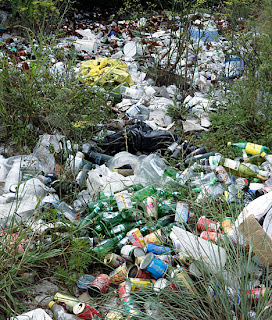
The Great Pacific Garbage Patch The great pacific garbage patch is formed by us, humans.  When we produce and consume plastic or any other form of waste, we are contributing to the many deaths of marine wildlife every day.  Midway Atoll, or Midway Island, is located in the Pacific Ocean.  Of the 1.5 million Laysan Albatrosses  that inhabit Midway Atoll, nearly all are found to have plastic in their digestive system.   Approximately one-third of the chicks die mostly due to being fed plastic from their parents. If we reduce the amount of plastic that we produce and consume, millions of marine wildlife lives will be saved. Go save the planet!
Image
Creating Extinction With our bad habits There are countless animals and other living things suffering from global warming.  Polar bears are highly threatened by melting ice due to our carelessness and unawareness.  With their homes melting away quickly, polar bears are being forced to move to warmer climate so that they are able to go to bed and wake up the next day on solid land.  If we keep being as careless as we are right now, Polar bears will become extinct very soon.  This is because polar bears cannot survive just any where, they can only live in very cold, icy climates.  When the ice runs out, polar bears and countless other amazing species of living things will become extinct in the wild. Put some posters around your neighborhood to raise awareness: http://assets.worldwildlife.org/publications/527/files/original/DareTheWorld_Vertical_19.6x26.6cm.pdf?1355438862 http://assets.worldwildlife.org/publications/528/files/original/WhatAreYou...
Image
An Environmentalist's View on Cars Just about everyone drives almost everywhere in cars!  Considering that an average car emits about 6 tons of carbon dioxide every year.   Knowing that global warming is mainly caused by carbon dioxide, that can't be good!   This photograph shows a car emitting a large amount of smog, contributing largely to global warming, This chart shows how Americans commute to work: The amount of Americans that commute to work by driving alone is very believable, considering the large quantity of cars that are on roads and highways all of the time, but also thoroughly disgusting!  Cars contribute to a very high percentage  of global warming  by emitting carbon dioxide, smog, smoke, and other harmful gases into the air and are driven almost everywhere by most of the U.S. population. Cars produce a lot of smog, which hurts living conditions and creates numerous health problems, such as asthma and even l...
Image
Environmental Affects of Eating Animals 7.3 million people, or 3.2 percent of U.S. adults, follow a vegetarian-based diet.  About 1 million people, or 0.5 percent, are vegans, who consume no animal products at all. Being a vegetarian myself, I know all about it.  My mom used to be vegan, so I know all about that, too.  Vegetarians do not eat any meat while vegans don't eat any animal products at all, including dairy and eggs.  One of the questions I get asked most often is "So, what  do  you eat?" The answer to that is basically everything that isn't an animal.  You can eat fruits, vegetables, grains, tofu, dairy, eggs, and everything that didn't have a face.  There is also processed soy products like vegetarian sausage, bacon, burgers, and chicken. Some people who eat animals probably don't even know exactly what they eat when they scarf down a hot dog.  Most likely they think "I'm just eating meat" or "I'm just eat...
Image
Eco Hero: Julia Butterfly Hill Hill climbing Luna Julia Butterfly Hill is an American activist and environmentalist.  In order to stop the clear cutting of some Giant Redwoods in Humboldt County, Hill lived on two blocks of wood in one of these redwoods, named Luna, for 738 days.  Others brought her provisions and other survival supplies when she needed them.  She faced very cold temperatures and angry loggers, but stayed until the Pacific Lumber Company agreed to protect Luna and all of the trees within a 200 foot buffer zone. Luna Hill gives a speech Hill now is a motivational speaker and holds some 250 events every year.  She continues to protest for the rights of the earth and supports eco-friendly organizations. Julia Butterfly Hill has set a good example for people all over the world by standing up for what she believes in, showing her passion for the environment, and showing her consideration for future gener...
Image
Deforestation About 10 million trees are cut down daily and about 4 billion trees are cut down per year!   Trees provide shelter for animals, some of these animals are endangered!  Trees also produce oxygen, a  necessity to all life on earth. One of the ways that these trees are used is in toilet paper.  20,805 sheets of toilet paper are used by the average U.S. consumer per year.          Here are some more facts about deforestation: About 100 million trees are cut down every year just for junk mail, which is                         equivalent to all of the trees in the Rocky Mountain National Park being cut down  every 4 months.  A major cause of deforestation is the clear cutting of forests for cattle ranches that   raise cows for meat. Here is a picture of before and  after  deforestation: Go save the planet!
Image
World Energy Consumption This chart shows how much energy is used in the whole world each year: Energy use (TWh) Year Fossil Nuclear Renewable 1990 83,374 6,113 13,082 2000 94,493 7,857 15,337 2008 117,076 8,283 18,492 Change 2000-2008 22,583 426 3,155 Here are some ways that you can reduce the amount of energy used per year, which contributes to global warming:           1.  Turn out the lights when you are not in the room.           2.  Unplug everything that is not in use or is not used often.           3.  Use the heater in your house less, wear warm clothes more.           4.  Set your computers to sleep or hibernate when not in use.           5.  Use appliances efficiently. Go save the planet!